difference between Ring0-3 to Linux file control access
Similarity
they record the Privilege/Identity of the subject (who is acting) and the Permissions/Constraints of the object (what is being acted upon), then perform a hardware or software check before every sensitive operation.
Differences
1. Subject Identity: Where is the "Who am I" stored?
Ring 0-3: The identity is Hard-Wired. It is the CPL (Current Privilege Level) stored in the lower 2 bits of the CS (Code Segment) register. It changes instantly when the CPU switches execution context.
File Access Control: The identity is Logical. It is the UID/GID (User/Group ID) stored in the process's task_struct (a data structure in kernel memory). It represents the human user or service who "owns" the process.
2. Granularity: What is being protected?
Ring 0-3: The constraints are attached to CPU Instructions and Physical Resources.
Example: Only CPL=0 can execute HLT (halt) or MOV CR3 (change page table). If CPL=3 tries, the CPU hardware triggers an exception.
File Access Control: The constraints are attached to Logical Objects (Files, Directories, Sockets).
Example: The kernel checks if UID 1000 has w (write) permission in the iNode of /etc/shadow.
3. Storage Media
Ring 0-3: The "permissions" are stored in the User/Supervisor (U/S) bit in the Page Table Entries (PTE) in RAM (and cached in TLB). It must be checked in nanoseconds by the MMU.
File Access Control: The "permissions" are stored on Disk. The rwx bits are part of the iNode metadata on the Disk.
4. Escalation Mechanism: How to gain more power?
Ring 0-3 (Privilege Transition): A Ring 3 process must execute a specific instruction like SYSCALL . This forces the CPU to jump to a pre-defined kernel entry point like an interupt. You cannot "become" Ring 0 and continue running your own code; you must hand over control to the Kernel.
File Access Control (Permission Escalation): sudo or su
Summary Table: Hardware Barrier vs. Software Guard
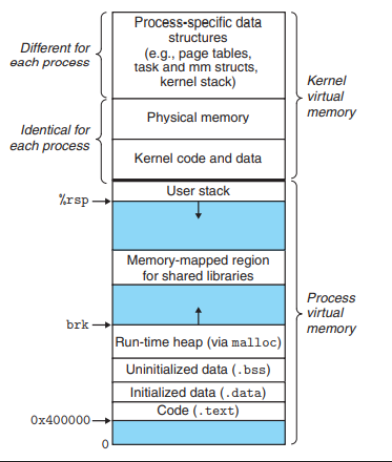
Process Component in Virtual Memory